 The Federal Tax Authority (FTA) has announced that businesses must complete Corporate Tax registration within 90 days from the Date of Incorporation / MOA.
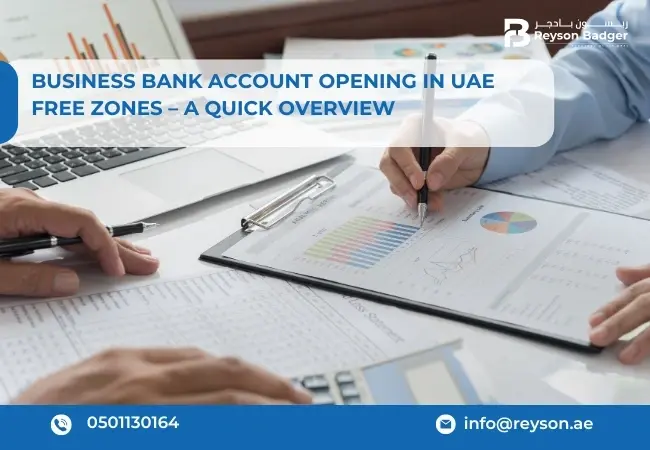


The United Arab Emirates (UAE) has become one of the most attractive business destinations in the world, thanks to its investor-friendly policies, tax benefits, and state-of-the-art infrastructure. Among the many business environments available, UAE Free Zones stand out as a preferred choice for entrepreneurs, startups, and global corporations alike.
Establishing a company in a Free Zone allows investors to enjoy 100% foreign ownership, full profit repatriation, and zero import/export duties. However, to operate efficiently, a reliable banking structure is crucial and this is where Business Bank Account Opening in UAE Free Zones becomes essential.
Whether you’re starting a small venture or expanding internationally, having a dedicated Corporate Bank Account UAE ensures smooth financial management, regulatory compliance, and professional credibility. Let’s explore everything you need to know about opening a business bank account in UAE Free Zones.
Why Open a Business Bank Account in UAE Free Zones?
Setting up a Free Zone Business Account UAE offers significant benefits for foreign investors. The UAE’s Free Zones are designed to simplify business setup while providing an ecosystem for growth and innovation.
Key Benefits of Free Zones
- 100% foreign ownership without the need for a local sponsor.
- Full repatriation of capital and profits.
- Tax exemptions on personal and corporate income (subject to new corporate tax regulations).
- Simplified import and export procedures.
- Access to world-class infrastructure and logistics hubs.
Why a Business Bank Account Matters?
A dedicated Corporate Bank Account UAE is essential for managing company transactions, separating personal and business finances, and ensuring compliance with UAE banking and tax laws.
Free Zone companies rely on their business bank accounts for:
- Receiving payments from international clients.
- Paying suppliers and employees.
- Managing operating expenses.
- Maintaining transparent financial records for VAT and tax filings.
In short, Bank Account Opening in UAE Free Zones ensures financial transparency, supports cross-border operations, and enhances business credibility.
Types of Business Bank Accounts Available in Free Zones
Free Zone businesses in the UAE can choose from several types of corporate accounts depending on their needs. Selecting the right one ensures effective cash flow management and smooth operations.
1. Current Account: A current account is the most common choice for Free Zone companies. It allows daily transactions, cheque book access, and easy fund transfers for operational payments.
2. Savings Account: Some Free Zone companies prefer to open a savings account to earn interest on surplus funds. While it’s less common for active trading, it’s useful for holding reserves.
3. Multi-Currency Account: A multi-currency account is ideal for companies dealing with international clients. It allows transactions in multiple currencies (AED, USD, EUR, GBP, etc.), reducing foreign exchange risks.
Choosing the right Business Bank Account in UAE ensures efficient financial management and compliance with Free Zone regulations. Each account type serves a different purpose, depending on your company’s business model and international exposure.
Steps for Business Bank Account Opening in UAE Free Zones
The process of Business Bank Account Opening in UAE Free Zones is straightforward but requires proper documentation and compliance with bank regulations. Here’s a quick step-by-step guide:
Step 1: Choose a Bank
Research and select a bank that aligns with your business type and Free Zone jurisdiction. Some popular options include:
- Emirates NBD: Best for SMEs and digital banking.
- ADCB (Abu Dhabi Commercial Bank): Excellent customer support and flexible accounts.
- RAKBANK: Known for cost-effective solutions for startups.
- Mashreq Bank: Offers quick onboarding and multi-currency facilities.
Additionally, digital banking platforms such as Wio Business and Mashreq NeoBiz provide simplified, paperless account setup options tailored for Free Zone entrepreneurs and freelancers
Step 2: Gather Required Documents
Collect all necessary documents such as:
- Trade license issued by the Free Zone Authority.
- Shareholder and director passport copies.
- Memorandum of Association (MOA).
- Proof of office address (lease or Ejari certificate).
Step 3: Submit Application
Submit your application either online (for preliminary review) or in person at the branch. While some banks allow initial digital submissions, final verification and approval usually require in-person visits to meet compliance requirements
Step 4: Attend KYC Verification
Banks will schedule a Know Your Customer (KYC) interview to verify your identity, business activity, and source of funds. Depending on your business type or shareholder structure, additional compliance checks or documents may be requested. This step ensures compliance with UAE’s anti-money-laundering regulations.
Step 5: Account Activation
After verification, the bank will review your application. Once approved, your Free Zone Business Account UAE will be activated, and you can start making transactions.
Documents Required for Free Zone Business Bank Account
Proper documentation plays a vital role in ensuring a smooth Business Bank Account Opening in UAE Free Zones. Incomplete or incorrect paperwork is one of the most common causes of delay.
Here’s what most banks typically require:
- Valid Trade License issued by the Free Zone Authority.
- Passport copies of all shareholders and directors.
- Emirates ID and residence visa (if applicable).
- Company Memorandum of Association (MOA) and Share Certificates.
- Office Lease Agreement or Ejari Certificate.
- Company profile or business plan (for new startups).
- Six-month personal bank statement (for verification).
Ensure all documents are valid, signed, and officially translated into English or Arabic if they were issued in another language Proper documentation is the key to a fast and successful Business Bank Account Opening in UAE Free Zones.
Common Challenges and How to Overcome Them
While opening a Corporate Bank Account UAE is generally straightforward, new entrepreneurs often face certain challenges. Understanding these in advance helps you avoid unnecessary delays.
Common Issues
- Incomplete or outdated documents causing application rejection.
- Strict compliance checks for new or high-risk industries.
- High minimum balance requirements for certain traditional banks (ranging from AED 25,000 to AED 500,000). However, some digital or SME-focused banks offer lower or even zero-balance accounts
How to Overcome These Challenges
- Prepare documentation in advance. Verify requirements with your chosen bank before applying.
- Maintain transparency about your business model and funding sources during KYC.
- Seek expert assistance from consultants experienced in Business Bank Account Opening in UAE.
- Choose a Free Zone–friendly bank known for flexible policies toward startups and SMEs.
With proper preparation, even new entrepreneurs can complete Bank Account Opening in UAE Free Zones smoothly and efficiently.
Benefits of Maintaining a Free Zone Business Bank Account
Maintaining a Business Bank Account in UAE Free Zones is not only a legal necessity but also a long-term advantage for any enterprise.
Key Benefits Include:
Seamless Local and International Transactions:Transfer funds globally with ease through efficient UAE banking systems.
- Professional Credibility: A Corporate Bank Account UAE builds trust with clients, partners, and suppliers.
- Regulatory Compliance: Facilitates compliance with VAT, corporate tax, and anti-money laundering (AML) regulations by maintaining transparent and traceable business transactions.
- Access to Credit Facilities: Businesses with a strong banking history gain better access to loans, credit cards, and trade financing.
- Financial Transparency: Helps segregate personal and business finances, ensuring accurate accounting and reporting.
Maintaining a Free Zone Business Account UAE is vital for promoting business growth, credibility, and financial compliance all cornerstones of sustainable success.
Conclusion
In today’s dynamic business environment, efficient banking plays a crucial role in ensuring smooth operations and regulatory compliance. At Reyson Badger , we assist entrepreneurs and international companies in simplifying the Business Bank Account Opening process in UAE Free Zones through expert guidance on documentation, compliance, and coordination with banks. As a trusted Accounting and Auditing firm, we ensure your financial setup aligns with UAE regulations and business objectives, helping your enterprise operate seamlessly and achieve sustainable growth in the UAE market.