 The Federal Tax Authority (FTA) has announced that businesses must complete Corporate Tax registration within 90 days from the Date of Incorporation / MOA.
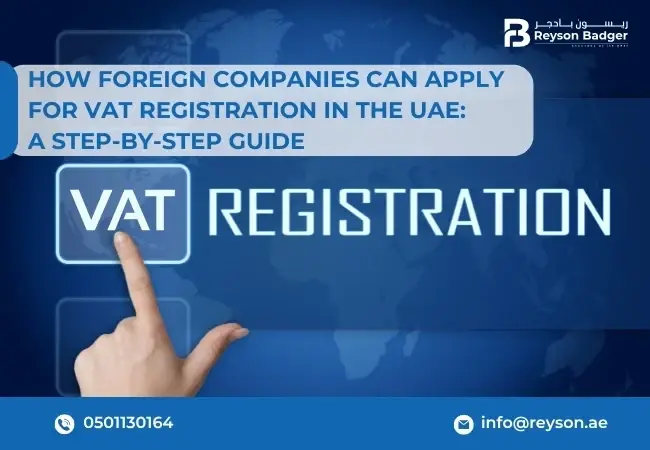


VAT registration in the UAE is essential for foreign companies supplying taxable goods or services within the country. Many foreign businesses struggle to understand and comply with these rules. Federal Decree-Law No. 8 of 2017 requires all foreign companies to register if they make taxable supplies and are not exempt under the Reverse Charge Mechanism. This guide clarifies the registration process, criteria, required documents, and compliance responsibilities, including the reverse charge mechanism, to help you operate smoothly and meet UAE VAT obligations. Considering the complexity, many foreign businesses rely on professional VAT registration services in Dubai for seamless compliance.
Why Foreign Companies Must Consider VAT Registration?
Foreign companies supplying taxable goods or services in the UAE must register for VAT if the recipient is not responsible for the tax, such as sales to private individuals. The UAE Federal Tax Authority (FTA) enforces this rule strictly. Registration is mandatory when selling to non-registered recipients, and skipping it can cause legal issues.
Failing to register can lead to fines, penalties, and disruptions, such as customs clearance issues. Timely registration ensures business continuity and shows your commitment to UAE tax laws.
VAT Registration Criteria & Thresholds for Foreign Companies
UAE resident businesses register based on turnover thresholds, but non-resident foreign companies follow different rules. Foreign companies must register as soon as they make any taxable supply to a non-registered recipient in the UAE, regardless of turnover.
It is also important to check the type of goods or services supplied and whether the recipient is registered for VAT. If the recipient is a VAT-registered business, the Reverse Charge Mechanism usually applies, and the foreign company may not need to register.
Mandatory vs. Voluntary VAT Registration
Resident UAE businesses must register if annual taxable supplies exceed AED 375,000 and may register voluntarily if supplies are above AED 187,500. Non-resident foreign companies have no monetary thresholds and must register immediately when supplying to non-registered persons.
Assessing Supply Types and Recipient Status
Foreign companies should assess the nature of supplies and whether the recipient is a private customer or a VAT-registered business in the UAE. This determines VAT liability, especially under the reverse charge mechanism, which shifts tax payment to the buyer.
| Criteria | Resident UAE Businesses | Foreign Companies |
|---|---|---|
| Mandatory Registration Threshold | AED 375,000 annual taxable supplies | No threshold (if RCM does not apply) |
| Voluntary Registration Option | Above AED 187,500 annual taxable supplies | Not applicable |
| Consideration of Recipient Type | Standard criteria apply | Critical: determines if Reverse Charge applies |
Step-by-Step VAT Registration Process for Foreign Companies
The UAE Federal Tax Authority requires these steps for VAT registration by foreign companies. First, confirm if registration is needed based on the supply type and recipient.
Next, prepare the necessary documents. Apply via the EmaraTax portal with detailed company information.
After approval, you receive a Tax Registration Number (TRN). Use this number in all VAT transactions and filings. Maintaining compliance after registration is vital to avoid penalties and ensure smooth operations.
Step 1: Determine Whether VAT Registration Is Required
Confirm if your company supplies taxable goods or services to UAE recipients and check if the recipient is responsible for VAT under the reverse charge mechanism, which may exempt you from registering.
Step 2: Prepare Required Documentation
Gather a valid trade license from your home country, certificate of incorporation, articles of association, bank details, and authorized signatory information.
Step 3: Submit Application Through EmaraTax Portal
Complete the VAT registration form on EmaraTax, providing business details, contact info, supply details, and estimated turnover. Attach all required documents.
Step 4: Receive Tax Registration Number (TRN)
Once approved, you get a 15-digit TRN, which you must use for invoicing, VAT returns, and official correspondence.
Step 5: Maintain VAT Compliance
After registration, issue VAT-compliant invoices, keep accurate records, file VAT returns on time, and pay VAT dues promptly to avoid fines.
Special Considerations for Foreign Businesses
Foreign companies operating UAE branches or supplying VAT-registered businesses should be aware of specific rules. A UAE branch creates a Fixed Establishment and is treated as a resident business for VAT, so the AED 375,000 mandatory registration threshold applies.
The reverse charge mechanism shifts VAT payment responsibility to VAT-registered UAE recipients, usually exempting foreign suppliers from registration.
Proper classification of supplied goods or services and thorough documentation are critical to avoid penalties and operational issues during FTA audits.
UAE Branch VAT Registration
A branch in the UAE is a Fixed Establishment, making the company a resident for VAT. This means the standard AED 375,000 threshold applies, not the zero threshold for non-residents.
Reverse Charge Mechanism
If supplying VAT-registered businesses in the UAE, the recipient accounts for VAT under the reverse charge mechanism, exempting the foreign company from registering.
Accurate Classification and Documentation
Correctly classifying goods or services and keeping complete records are essential to prove compliance and avoid fines during tax authority reviews.
Conclusion
Understanding VAT registration and compliance requirements allows foreign companies to operate without interruption in the UAE. Proper registration prevents fines and legal risks, ensuring smooth business flow under Federal Decree-Law No. 8 of 2017. Contact Reyson Badger for expert VAT guidance tailored to your foreign company's needs. We ensure smooth registration, compliance, and risk management, so you can focus on growing your business in the UAE.